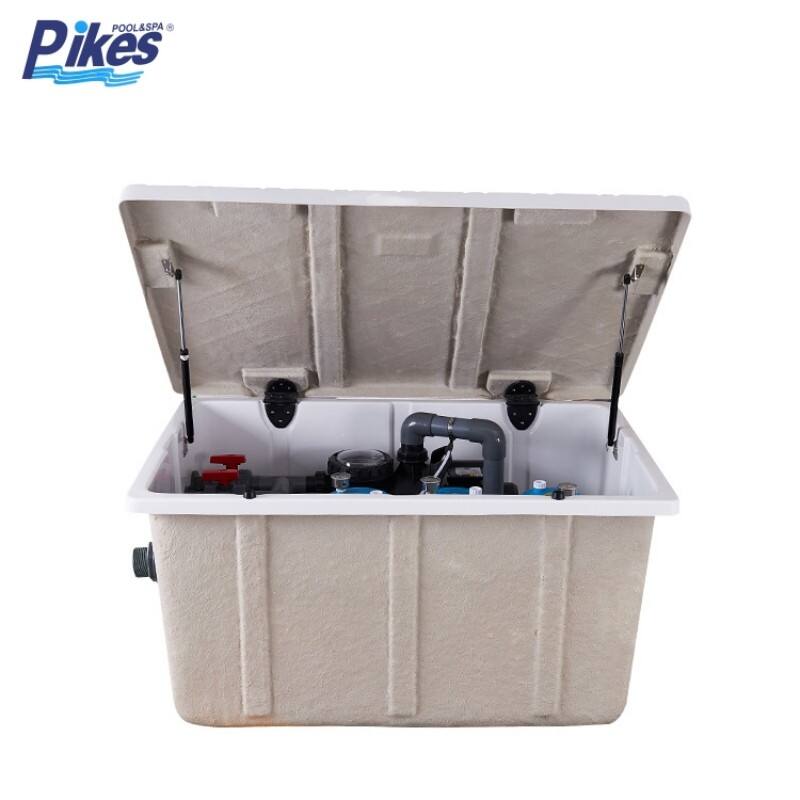
Professional Machine Room Equipment Solutions - Advanced Data Center Infrastructure

Get a Free Quote

Our representative will contact you soon.
Email
Mobile
Name
Company Name
Message
0/1000

machine room equipment

Machine room equipment represents the backbone of modern data centers and enterprise facilities, providing essential infrastructure for computing, networking, and storage operations. This comprehensive suite of hardware includes servers, switches, routers, storage arrays, power distribution units, cooling systems, and monitoring devices that work together to maintain optimal operational environments. The primary function of machine room equipment centers on processing data, managing network traffic, storing information securely, and ensuring continuous system availability through redundant power and cooling mechanisms. Modern machine room equipment incorporates advanced virtualization technologies, enabling organizations to maximize resource utilization while reducing physical footprint and operational costs. These systems feature sophisticated management interfaces that allow administrators to monitor performance metrics, configure settings remotely, and receive real-time alerts about potential issues. Energy efficiency has become a critical technological feature, with contemporary machine room equipment designed to minimize power consumption through intelligent load balancing and dynamic resource allocation. Scalability represents another key characteristic, allowing businesses to expand their infrastructure seamlessly as demands grow. The applications of machine room equipment span across numerous industries, including financial services, healthcare, manufacturing, education, and government sectors. In financial institutions, this equipment processes millions of transactions daily while maintaining strict security protocols. Healthcare organizations rely on machine room equipment to store patient records securely and support critical medical applications. Manufacturing companies use these systems to manage supply chains, monitor production processes, and analyze operational data. Educational institutions depend on machine room equipment to support online learning platforms, research databases, and administrative systems. Government agencies utilize this technology for citizen services, security applications, and inter-agency communications. The integration of artificial intelligence and machine learning capabilities has transformed traditional machine room equipment into intelligent systems capable of predictive maintenance, automated troubleshooting, and optimized resource allocation.

Popular Products

Machine room equipment delivers substantial operational benefits that directly impact business productivity and profitability. Organizations experience significant cost reductions through improved energy efficiency and reduced maintenance requirements compared to older infrastructure systems. Modern machine room equipment consumes up to fifty percent less power than legacy systems while delivering superior performance levels. This translates into lower electricity bills and reduced cooling costs, creating measurable financial savings for businesses of all sizes. The enhanced reliability of contemporary machine room equipment minimizes costly downtime that can disrupt operations and damage customer relationships. Advanced monitoring capabilities provide early warning systems that detect potential failures before they occur, allowing technical teams to address issues proactively rather than reactively. This preventive approach saves companies thousands of dollars in emergency repair costs and lost productivity. Scalability advantages enable organizations to adapt quickly to changing business requirements without expensive infrastructure overhauls. Companies can add processing power, storage capacity, or network bandwidth incrementally, spreading capital investments over time rather than making large upfront expenditures. The flexibility of modern machine room equipment supports both physical and virtual expansion strategies, accommodating diverse growth patterns and business models. Security enhancements built into contemporary systems protect valuable data assets from cyber threats and unauthorized access attempts. Multi-layered security protocols, encryption technologies, and access controls safeguard sensitive information while maintaining compliance with industry regulations. Remote management capabilities reduce the need for on-site technical staff, lowering operational expenses while improving response times to system issues. Administrators can monitor multiple locations from centralized control centers, optimizing resource allocation and reducing travel costs. The improved performance characteristics of modern machine room equipment enable faster data processing, quicker application response times, and enhanced user experiences. These performance gains translate into increased employee productivity and improved customer satisfaction levels. Automated backup and disaster recovery features protect against data loss while ensuring business continuity during unexpected events. Environmental monitoring systems maintain optimal operating conditions, extending equipment lifespan and reducing replacement costs. The standardization of machine room equipment components simplifies procurement processes, reduces training requirements, and streamlines maintenance procedures across organizations.

Latest News

What Is A Saltwater Chlorinator And How Does It Work

15

Jan

What Is A Saltwater Chlorinator And How Does It Work

View More
Cartridge Filter: Efficient And Water-Saving Pool Filtration Solution

15

Jan

Cartridge Filter: Efficient And Water-Saving Pool Filtration Solution

View More
Wall-Mounted Filter: Space-Saving Filtration Solution For Swimming Pools

15

Jan

Wall-Mounted Filter: Space-Saving Filtration Solution For Swimming Pools

View More
Pool Spa Equipment Joins AQUAFUN 2026 in Istanbul!

19

Jan

Pool Spa Equipment Joins AQUAFUN 2026 in Istanbul!

View More

Get a Free Quote

Our representative will contact you soon.
Email
Mobile
Name
Company Name
Message
0/1000

machine room equipment

Advanced Power Management and Energy Efficiency

Advanced Power Management and Energy Efficiency

Machine room equipment incorporates sophisticated power management systems that revolutionize energy consumption patterns in modern data centers and enterprise facilities. These intelligent systems continuously monitor power usage across all connected devices, automatically adjusting consumption levels based on real-time demand fluctuations and operational requirements. The advanced power management features include dynamic voltage scaling, intelligent load balancing, and automated power state transitions that collectively reduce energy waste by up to sixty percent compared to traditional infrastructure. Smart power distribution units integrated within machine room equipment provide granular control over individual circuit loads, enabling administrators to identify energy-intensive applications and optimize power allocation strategies. The implementation of high-efficiency power supplies with ninety-five percent conversion rates minimizes energy loss during AC to DC conversion processes, resulting in substantial cost savings over the equipment lifecycle. Predictive power analytics capabilities analyze historical consumption patterns to forecast future energy requirements, allowing organizations to plan capacity expansions more effectively and negotiate better utility contracts. Temperature-aware power management algorithms adjust cooling system operations based on server workloads, reducing overall facility energy consumption while maintaining optimal operating environments. The integration of renewable energy sources becomes seamless through intelligent power management interfaces that automatically switch between grid power and alternative energy sources based on availability and cost considerations. These systems support battery backup integration with advanced charging algorithms that extend battery life while ensuring reliable power during outages. Power usage effectiveness monitoring provides detailed reports that help organizations identify improvement opportunities and track progress toward sustainability goals. The environmental benefits extend beyond cost savings, as reduced energy consumption directly correlates with lower carbon emissions and improved corporate environmental responsibility ratings. Machine room equipment with advanced power management capabilities enables organizations to achieve green building certifications and meet increasingly stringent environmental regulations while maintaining peak operational performance.
Intelligent Monitoring and Predictive Maintenance

Intelligent Monitoring and Predictive Maintenance

The intelligent monitoring systems embedded in modern machine room equipment transform traditional reactive maintenance approaches into proactive, data-driven strategies that maximize uptime and operational efficiency. These sophisticated monitoring platforms continuously collect thousands of data points from sensors distributed throughout the infrastructure, including temperature readings, vibration levels, power consumption metrics, network traffic patterns, and component health indicators. Machine learning algorithms analyze this vast amount of operational data to identify subtle patterns that precede equipment failures, enabling maintenance teams to address issues before they impact business operations. The predictive maintenance capabilities of machine room equipment can forecast component failures with ninety-five percent accuracy, typically providing weeks or months of advance warning before critical issues occur. This early detection system dramatically reduces unplanned downtime, which can cost organizations thousands of dollars per hour in lost productivity and customer dissatisfaction. Real-time alerting mechanisms send immediate notifications to technical staff when operating parameters exceed predetermined thresholds, ensuring rapid response to potential problems. The monitoring systems provide comprehensive dashboards that visualize equipment performance trends, capacity utilization rates, and historical maintenance records, enabling data-driven decision making for infrastructure planning and budget allocation. Automated diagnostic routines run continuously in the background, performing health checks on critical components and generating detailed reports that help maintenance teams prioritize their activities. The integration of augmented reality interfaces allows technicians to access equipment specifications, maintenance procedures, and diagnostic information directly through mobile devices while working on-site. Remote monitoring capabilities enable expert technicians to provide support and troubleshooting assistance from distant locations, reducing response times and minimizing the need for specialized on-site personnel. The intelligent monitoring systems also track warranty information, maintenance schedules, and compliance requirements, automatically generating work orders and ensuring regulatory adherence. Performance benchmarking features compare current operations against industry standards and historical baselines, identifying optimization opportunities that can improve efficiency and reduce costs. These comprehensive monitoring solutions provide the foundation for implementing advanced automation strategies that further enhance the reliability and performance of machine room equipment while reducing operational complexity.
Seamless Scalability and Future-Ready Architecture

Seamless Scalability and Future-Ready Architecture

Machine room equipment designed with seamless scalability capabilities empowers organizations to adapt dynamically to evolving business requirements without disrupting existing operations or requiring extensive infrastructure modifications. The modular architecture underlying modern machine room equipment enables incremental expansion of computing power, storage capacity, and network bandwidth through standardized components that integrate effortlessly with existing systems. This flexible approach eliminates the traditional challenges associated with capacity planning, allowing businesses to scale resources up or down based on actual demand rather than projected requirements. Hot-swappable components ensure that upgrades and expansions can occur without system downtime, maintaining continuous operations even during significant infrastructure changes. The standardized interfaces and protocols used in contemporary machine room equipment facilitate seamless integration between devices from different manufacturers, preventing vendor lock-in situations and promoting competitive pricing strategies. Software-defined infrastructure capabilities enable virtual resource allocation that can be adjusted instantly through management interfaces, providing unprecedented flexibility in resource distribution and utilization optimization. The future-ready architecture of machine room equipment incorporates emerging technology standards such as artificial intelligence acceleration, edge computing support, and next-generation networking protocols that ensure long-term viability and investment protection. Containerization support enables organizations to deploy applications using modern development methodologies while maintaining compatibility with legacy systems during transition periods. The scalable design principles extend beyond hardware considerations to include management systems, security protocols, and monitoring capabilities that grow proportionally with infrastructure expansion. Automated provisioning features reduce the time and expertise required to deploy new resources, enabling organizations to respond quickly to market opportunities and operational demands. The economic advantages of scalable machine room equipment become evident through reduced capital expenditure requirements, as organizations can defer investments until capacity increases are actually needed rather than over-provisioning for peak demand scenarios. Multi-tenant capabilities allow organizations to segregate resources for different departments, projects, or customers while maintaining centralized management and shared infrastructure benefits. The scalability features also support geographic distribution strategies, enabling organizations to deploy consistent infrastructure across multiple locations while maintaining centralized control and standardized operating procedures throughout their enterprise environments.

Get a Free Quote

Our representative will contact you soon.
Email
Mobile
Name
Company Name
Message
0/1000